

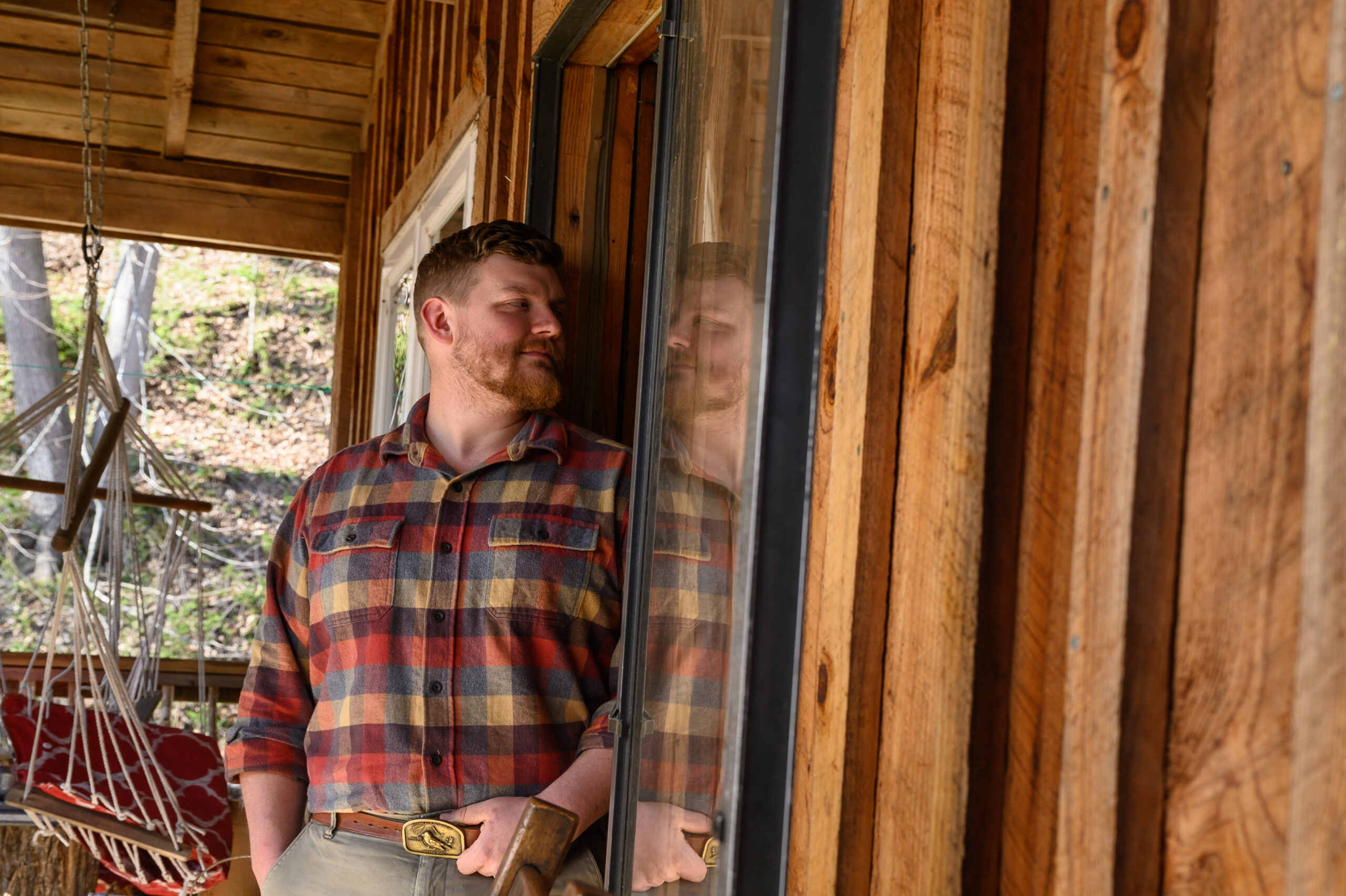
Receiving a Grammy Award recognition in 2024 has been one of the highlights of Matt Parsons’ career. However, his love of music and poetry was born long before “I Built a World” was nominated for Best Bluegrass Album. Parsons ’15 grew up in a household that created his love of both music and literature.
“My mom was a high school librarian, and my dad was a Bluegrass musician,” Parsons explains. “Education has been a pillar of my life and led me to be an educator myself.”
Being homeschooled allowed Parsons to choose how he wanted to spend his time learning. “I had the choice of whether I wanted to learn math for half an hour or play guitar for two hours,” he said. “Let’s just say I built up the callouses. My math scores didn’t suffer from this model of teaching.”
Keeping his options open for college was important to Parsons because he wanted to make sure he was making the right choice. “I liked Berea because when I told them about other schools I applied to, they were respectful of other places I was applying,” he said.
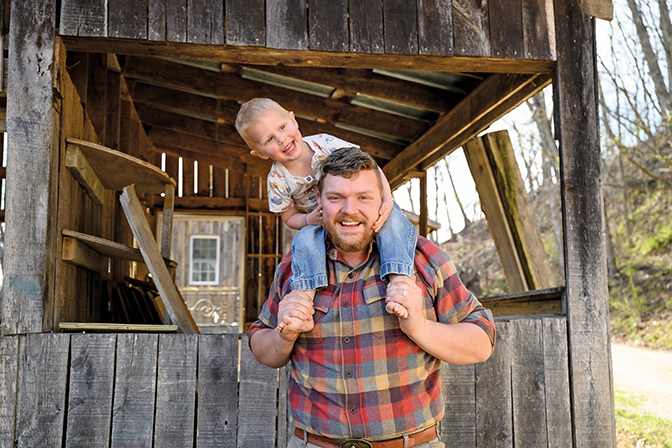
Photo by Niema Hussain ’27
Parsons was excited to be accepted to Berea and for the opportunity to study many subjects that interested him. Professors, like Chris Green, director of the Loyal Jones Appalachian Center, were instrumental in helping Parsons choose and successfully navigate the Appalachian Studies major. “He (Green) made sure that I knew Appalachia was my culture, too,” Parsons said. “He moved my interests in an academic manner. I attended the Appalachian Studies Conference annually. Everyone who cares about this region and literature should attend.
“I didn’t think of myself as a writer before coming to Berea,” Parsons continued. “I thought that writing was something that everyone did.”
Silas House, who holds the National Endowment for the Humanities (NEH) Chair in Appalachian Studies at Berea, noticed Parsons playing music during his sophomore year and invited him to join his senior creative writing seminar. “I felt really inadequate in that workshop since most of the other students had literature backgrounds, but Silas has a way of making writing a step-by-step process. It’s not potion making; it’s following a recipe.”
This allowed Parsons to feel more confident in his writing. One of the best things that happened to Parsons during his time at Berea was attending the Appalachian Writers’ Workshop at Hindman Settlement School. “Silas House dragged me to Hindman, kicking and screaming the first time,” he recalled. Since then, Parsons has not only attended workshops at Hindman, but he has also taught workshops there. Just down the road in Hindman, Parsons is being trained in the factory process at Troublesome Creek String Instrument Company and is currently building a personal guitar there through grant funding.
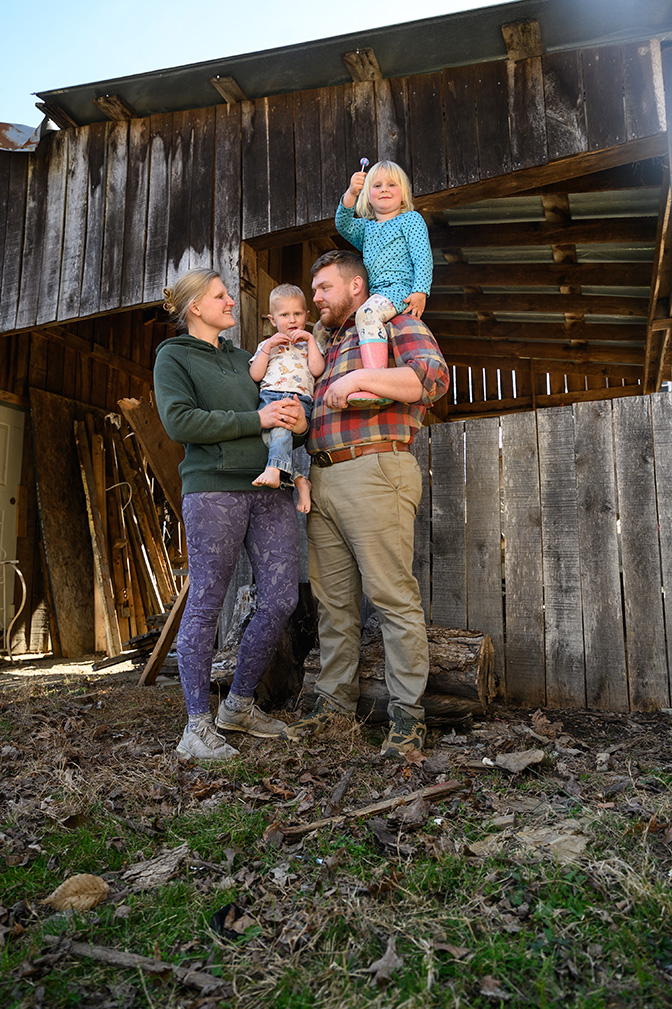
While he was a student at Berea, Parsons’ article was published in “Still: The Journal” with House’s help. He has gone on to publish two poetry books, “Holy Land” and “Mountain Roosters.” He has also written many songs, such as “Middle Class” and “Cyanide Queen,” which he sometimes performs with his wife, Annuet, in their music group Whistle & Fish. Matt and Annuet, have three kids: Hattie Jane, 5, Sidney Goodnight, 3, and Elsie Odette, 2 months.
Aside from mentors who helped him in the academic world, Parsons also gained a friend for life in Rick Childers, the Appalachian Male Initiative advocate and mentor. “When I asked to read what he was writing,” Parsons said of Childers, “I learned that he, too, was a writer.”
Having a friend in the writing community made him believe the writing world was accessible to him. “It was great to start to see a community forming around me,” he said. “I hope to give the same access to people with songwriting since that is the world that I have access to.”
After graduating from Berea, Parsons earned a Master of Fine Arts degree from Eastern Kentucky University, where he had the opportunity to travel to Portugal. Having traveled all over the world, he noted how many people seemed to know about Berea. “You don’t realize it until you are on a tour in Europe and someone has heard of Berea College,” he said.
Though Parsons still occasionally travels for his work, he now calls Olive Hill, Kentucky, home. He lives on a homestead with his family, which was always his father’s dream. “We all wanted to do something that was a righteous and morally OK way to live,” Parsons said.
This family tract of land is more than the land itself; it is about its history. The land Parsons’ father purchased was part of an old strip mine. “It seemed like the right thing to do to make this land into something productive,” he said.
While Parsons is proud of his Grammy-recognized song, he was not waiting for this moment, nor did he expect it. “My band got a gig singing for Red Barn Radio in Lexington, and I performed the song I wrote,” Parsons explained. “I was fulfilled by the art I was creating and the local opportunities to showcase it, whether it be my poetry, songwriting or singing.”