
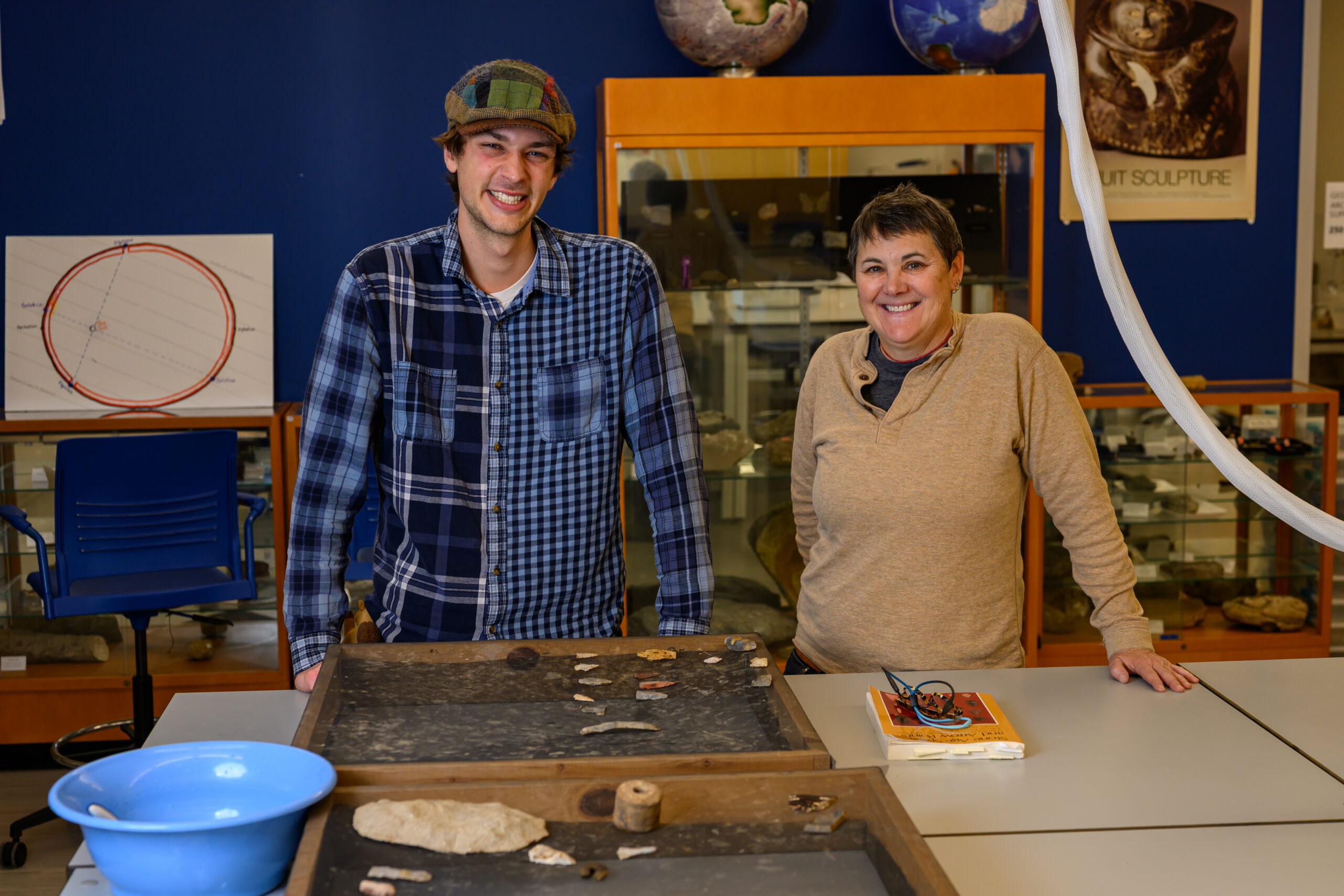
What type of career can a student studying anthropology pursue? “Almost anything,” says Dr. Broughton Anderson, associate professor of archeology at Berea College.
Berea College’s liberal arts education offers unique opportunities for students to pursue their goals in flexible, personalized ways. Archeology can be useful in many fields and is available to all students on campus, whether through an independent major or as an elective.
While Berea doesn’t offer a major in archeology, the College does have three anthropology professors on campus teaching in other departments. Dr. Anderson’s classes fall under art history, but archeology and the larger field of anthropology have broader focuses, she explained.
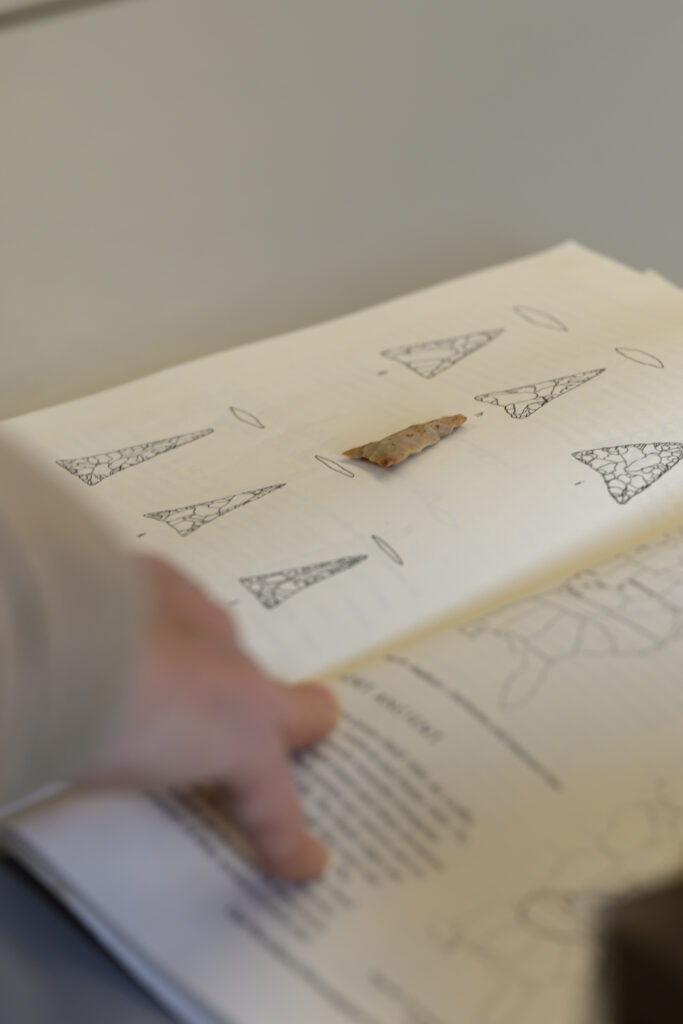
“The standard idea is that we work with remains (or ruins) of things, but it’s a lot deeper than that, depending on what area of interest you have,” Anderson said. “We’re looking for the same things—how humans have adapted and changed the world around them using material culture.”
Because anthropologists focus on culture, this prepares students to tackle jobs in almost any field. Anderson provided examples as diverse as medical school, law and construction consultants.
In such a broad field, archeologists can be found in critical roles throughout society. Anderson uses the example of the Federal Emergency Management Agency (FEMA), which operates a team of archeologists that go into areas recently affected by natural disasters. They monitor archeological sites that may have been destroyed or find new ones revealed by the disaster.
This is all part of a system where government agencies and companies have archeologists on staff. Other agencies Anderson mentioned are the National Park Service and the U.S. Army Corps of Engineers.
“I think that’s what anthropology is after: We’re trying to understand human beings,” Anderson said. “And we look to find ways of answering really tough questions with the hope that we solve problems.”
Anthropology is a field with broad applications, but it has equally universal interconnection with other fields. As a social science, Anderson explains that archaeologists work with incomplete data and sometimes other experts aid in understanding complex problems such as dating finds through radiocarbon dating or understanding food systems through molecular analysis.
“A good anthropologist knows who to ask when we can’t answer our own questions,” Anderson said. “If we can’t figure out what we’re looking at, or why it is the way it is, often the next step in the analysis is finding someone who can add context. We know to ask.”
It’s an interconnected field that builds wider working relationships. The word Anderson used was “interdisciplinary.” The implication is that it works in both directions and also allows for specialization. One can be an archeo-zoologist, for example, adding even more opportunities for people studying archeology.
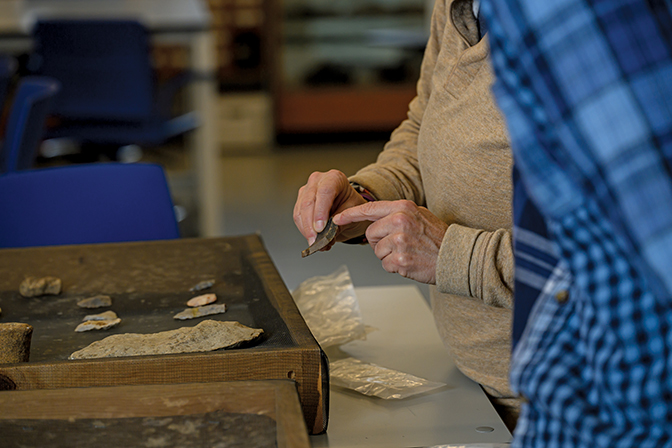
Photo by Eli Simpson ’27
Zeke ’26 is an anthropological archeology independent major who has worked closely with Anderson. He echoes her sentiment of anthropology’s extensive utility in society.
“I think archeology is useful as one of many tools that I have that I could use in outreach work, in working for our parks system, in working for the Kentucky Archeology Survey,” he said.
Zeke’s opportunities at Berea have been wide-ranging. Through study-abroad experiences, he studied Neanderthals in Spain and took archeology classes in Peru. In Kentucky, he studied sites of indigenous peoples and former plantations.
These experiences turn into practical, hands-on knowledge that can be applied broadly in society.
“There are so many pathways in life, and I have so many different tools,” Zeke said. “I don’t just study archeology. I study geology and environmental science as well. There’s so much that I could do.”
With widely applicable skills and experiences, Zeke is confident there will be plenty of job opportunities post-graduation.
“I think archeology does fit into an ‘I can do anything’ mentality because it gives me new tools that other majors don’t,” he said. “It’s great for puzzle solving, and it’s a lot of critical thinking. It’s great for a lot of different things.”

Let us all join 2gether 4 continuum the Berea College success mission throu this century & followin in2 developing among other institutions of higher education in this shared world