
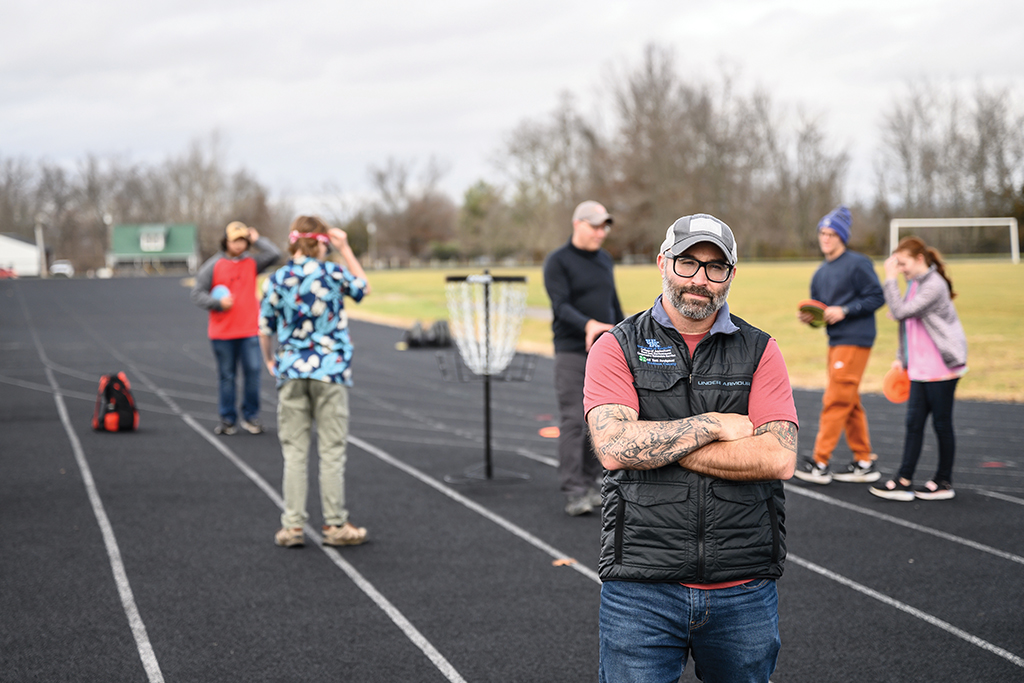
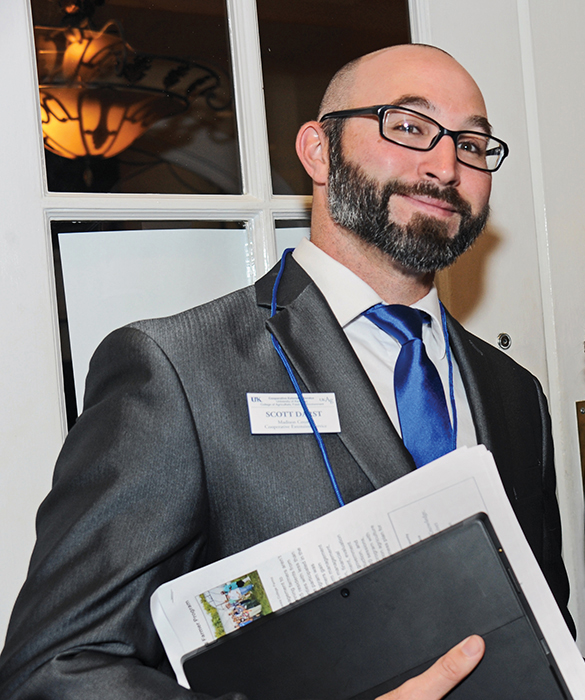
Scott Darst ’02 loves an underdog story. He was once one, himself. Now, as a 4-H youth development agent and professor, he helps other underdogs realize their potential.
Darst comes from a small, West Virginia town, predominantly white, evangelical and blue collar. As a kid, he came to understand that the local culture valued hard work, but not so much education. His father was a coal miner. Others worked on the Ohio River, still others in factories. It was expected Darst would follow a similar path.
That path seemed certain when his parents divorced, leaving his mother to take care of three boys on her own and young Darst to grow up without his father around.
“I didn’t have a biological father to say, ‘Hey, this is what you need to be doing,’” he said. “’This is how you become a man, a father.’ So, I always had that chip on my shoulder.”
Fortunately, Darst had teachers and guidance counselors who recognized his potential and encouraged him to apply to college. His friends were headed to nearby Marshall University, but Darst didn’t see college as a possibility.
“Paying for college wasn’t an option for me,” he remembered. “My friends were talking about it, and the amount of debt they were talking about was also not an option.”
Though Darst felt college was not in his future, a guidance counselor helped him apply to Berea College. He was “stunned” when he received his acceptance letter.
“I was like, ‘There’s got to be a catch. This is too good to be true.’”
The only thing that might hold him back now was cultural—he had heard grumblings from the local workforce that college was for people who didn’t want to work or were above manual labor.
“So, there was that stigma that I had to just ignore and just go,” he said. “And I’m glad I did. It really set me up for the future. It really gave me help to succeed.”
Through the labor program and rigorous academics, Berea provided Darst with a structure the young man needed, much like the 4-H program had done when he was a kid. His family circumstances drew him to major in child and family studies.
“When I went to college,” he said, “I knew I wanted to work with kids in some form or fashion. Through those classes, learning about childhood theories, I learned, oh, well, this is why I am the way I am. So how do I overcome that?”
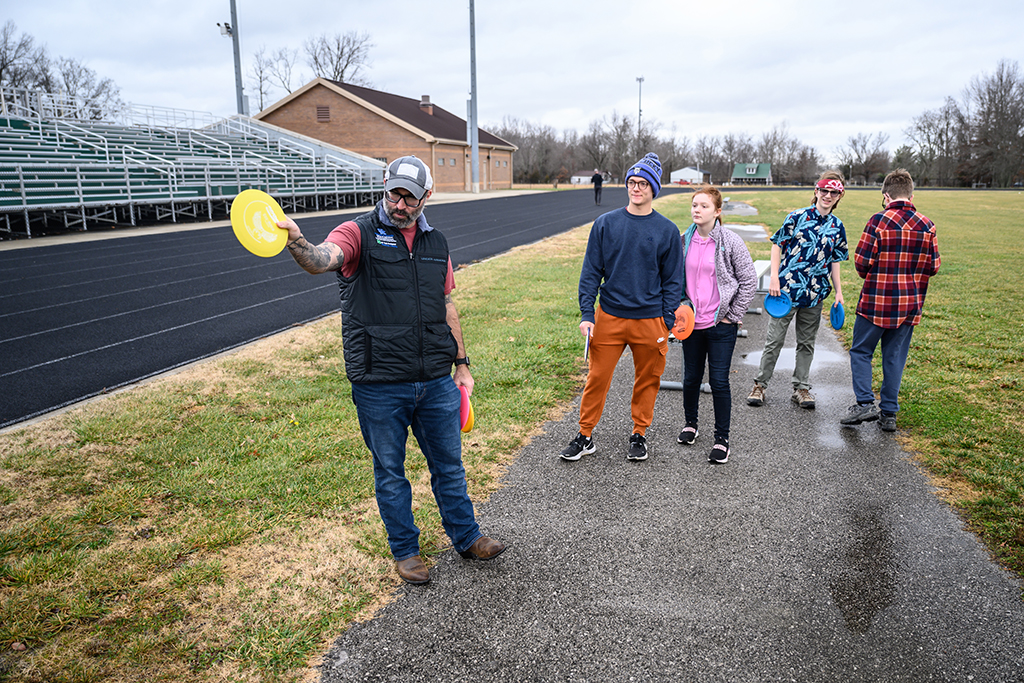
Darst decided he would become that male role model for other kids, pushing them to develop the way Berea College pushed him.
“I always was a kid that had potential but was never forced to use it,” he said. “Berea College forces you to use it. It forces you to open your mind, to work hard, to be responsible.”
After graduating, Darst worked as a pre-school teacher for a few years. Then he took a job as a case manager for therapeutic foster children.
“These were kids the state couldn’t place that have seen the worst of the worst,” Darst recalled. “And I had a passion for that. What these kids were facing, it was traumatizing. It brought back some memories for me.”
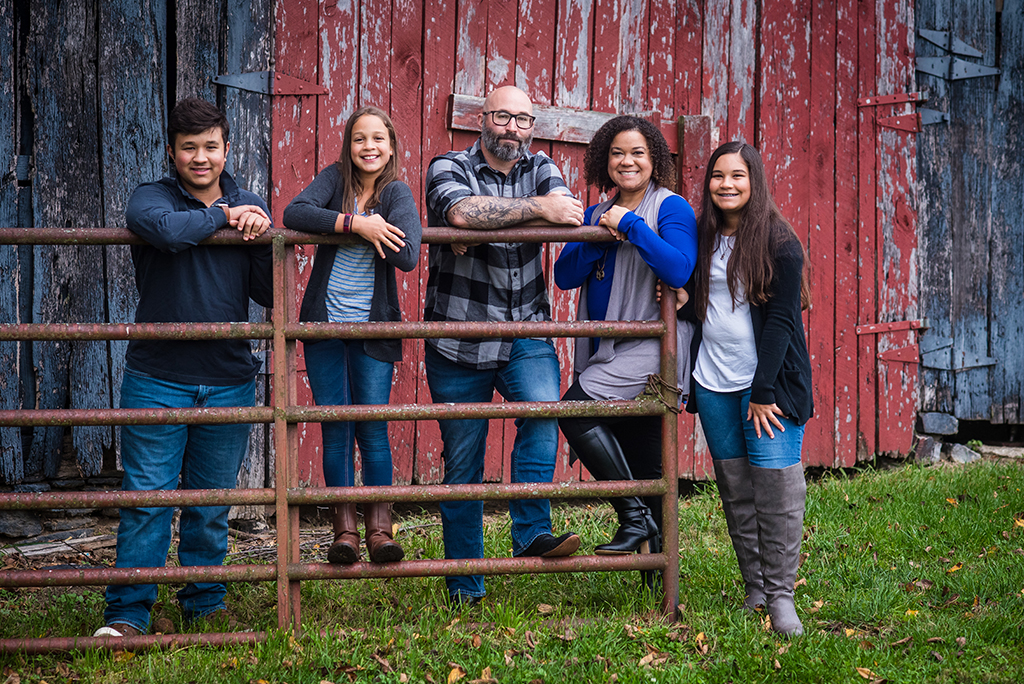
Eventually, Darst accepted a job with the University of Kentucky as a 4-H youth development agent at the Madison County Cooperative Extension Service. Not only could he continue in his positive work with children, he was also able to complete his master’s degree, which allowed him to take a part-time faculty position at Eastern Kentucky University.
“Man, I love it. You’re building kids up in a way that I’ve always wanted to do it,” he said. “You don’t know every situation that every kid is in, but eventually you start catching on. Like, this kid has never had an adult say ‘good job.’ Or ‘hey, you know, you’re really good this and that.’ I guess I could have been making more money somewhere else, but it’s quality of life. Do I want to make money or make a difference? That’s one thing Berea College has taught me, to make a difference. That’s what they instill in all their students.”
